ZEDREVIEWS
  • zed approves
  • povs
  • professions
  • products
  • us
  • products
    • features
    • future tech
    • highlights
    • movies
    • robotics
    • technology
    • tools
  • professions
    • automation
    • business
    • cloud-native
    • computing
    • cybersecurity
    • devops
    • hybrid cloud
    • multi-cloud
    • platforms
    • practices
    • programming
    • public cloud
    • software
    • solutions
  • povs
    • artificial intelligence
    • cities
    • data
    • data science
    • design
    • engineering
    • environment
    • learning
    • machine learning
    • people
    • research
    • science
  • us

    Milano Farmacia Italia

  • shop

Let`s Get Social

Facebook 0
Twitter 0
Mail 0
  • citi.io
  • liwaiwai.com
  • zedista.com
  • aster.cloud
  • takumaku.com
  • astercaster.com
  • bartday.com
  • dadahacks.com
zedreviews*
  • zed approves
  • povs
  • professions
  • products
  • us
  • people
  • science
  • technology

Nobel prize in physics awarded for work unveiling the secrets of electrons

  • October 4, 2023
Total
0
Shares
0
0
0
Screenshot at. Niklas Elmehed © Nobel Prize Outreach, CC BY-SA

Amelle Zaïr, King’s College London

The 2023 Nobel prize in physics has been awarded to a trio of scientists for pioneering tools used to study the world of electrons.

Electrons are sub-atomic particles that play a role in many phenomena we see every day, from electricity to magnetism. This year’s three Nobel physics laureates demonstrated a way to create extremely short pulses of light in order to investigate processes that involve electrons.

Pierre Agostini from The Ohio State University in the US, Ferenc Krausz from the Max Planck Institute of Quantum Optics in Germany and Anne L’Huillier from Lund University in Sweden will share the prize sum of 11 million Swedish kronor (£822,910).

Changes in electrons typically occur in a few tenths of an “attosecond”, which is a billionth of a billionth of a second. In order to study such brief events, special technology was needed.

The laureates developed experimental methods that produced pulses of light so short that they are measured in attoseconds. These could then be used to study the fleeting dynamics of electrons in physical matter – something that wasn’t previously possible.

The attosecond pulses, the shortest flashes of light ever produced, sparked a revolution in photonics – the science of light waves. They were used to take snapshots of electrons in different physical systems, such as in atoms, chiral molecules – molecules that are mirror images of one another – and very tiny nanoparticles among others.

The laureates have all contributed to enabling the investigation of such processes. For the first time, these quick pulses allowed scientists to match up the time scale of their observations to the natural, very fast time scales at which electron dynamics occurred.

This achievement required significant innovations in laser science and engineering – innovations that this year’s Nobel laureates worked on for decades.
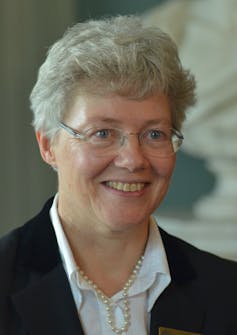
Anne L´Huiller, Lund University.
wikipedia, CC BY-SA

L’Huillier discovered a new effect that arose as the result of interactions between laser light and atoms in a gas. This interaction could be used to produce pulses of ultraviolet light that were each a few hundred attoseconds long.

Agostini and Krausz took this discovery even further. In 2001, Agostini was able to produce short light pulses and measure their width. The series of bursts produced using something called the RABBIT technique lasted just 250 attoseconds.
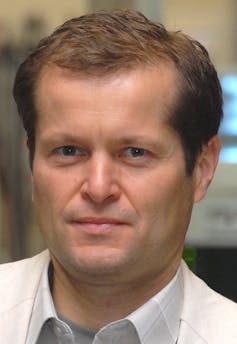
Ferenc Krausz.
Ferenc Krausz.
wikipedia, CC BY-SA

At around the same time, Krausz developed a different experimental approach, using it to successfully isolate a light pulse that lasted 650 attoseconds.

The two approaches developed by Agostini and Krausz form the basis for much attosecond research carried out today.

Exciting applications

There are some exciting potential applications for these attosecond pulses.

They could be used to study previously unknown physical phenomena in different types of material.

A spin-off area known as ultra-fast switching could also one day lead to the development of very fast-working electronics.

Attosecond pulse science could also find uses in medical diagnostics. By exposing a blood sample to a very fast pulse of light, scientists can detect tiny changes in the molecules in that sample. This could lead to a new way of diagnosing disorders, including cancer.

Our team at King’s has been working to combine the resolution on physical processes that attosecond pulses enable with novel advances in quantum information processing. This would create pulses of quantum light at the attosecond time scale that could have applications in quantum computing.

The award of the Nobel prize in this field inspires us to redouble our efforts to break novel ground. We wish our colleagues continued success, and we are eager to see what they will surprise us with next.The Conversation

Amelle Zaïr, Senior Lecturer of Physics, King’s College London

This article is republished from The Conversation under a Creative Commons license. Read the original article.

Total
0
Shares
Share 0
Tweet 0
Pin it 0
Share 0
Zed Reviews
Zed Reviews

Related Topics
  • Nobel Prize
  • Nobel Prize 2023
  • Physics
  • Science
  • Stockholm
  • Sweden
You May Also Like
View Post
  • artificial intelligence
  • people
  • technology

AI is finding chart success in Christian, gospel and country music

  • September 29, 2026
View Post
  • technology

Accenture and Google Cloud Transform Software Development with Volvo Cars

  • September 22, 2026
View Post
  • data
  • technology

Synthetic data could ease people’s concerns about privacy breaches. But who gets to create it?

  • September 15, 2026
View Post
  • science
  • technology

MIT researchers tackle the economic realities of fusion power

  • August 10, 2026
View Post
  • artificial intelligence
  • technology

IBM Study: One in Four Malicious Breaches are AI-Enabled, Costing Companies $6 Million on Average

  • July 29, 2026
View Post
  • artificial intelligence
  • people
  • technology

Taylor Swift joins celebrities using the law to fight back against AI deepfakes

  • July 11, 2026
View Post
  • artificial intelligence
  • technology

IBM and Red Hat Expand Lightwell with New Offerings to Build the Trust Infrastructure for AI-Era Open Source

  • July 8, 2026
View Post
  • artificial intelligence
  • business
  • technology

The AI investment surge hasn’t produced the expected results yet. That could change in 2026

  • June 26, 2026
A Field Guide To A.I.
Navigate the complexities of Artificial Intelligence and unlock new perspectives in this must-have guide.
Now available in print and ebook.

charity-water

LATEST POSTS
  • zedreviews.com_ninja-foodi-6-in-1-dual-zone-air-fryer_hero
    UK Zed Approves | Daily Deals. Ninja Foodi 6-in-1 Dual Zone 7.6L Air Fryer
  • I tried ChatGPT’s new virtual fitting room — it got the clothes right, but changed my body
  • When one robot learns, every robot knows if they can communicate
  • CEOs say AI is helping their businesses be more productive — even if they’re not always sure what’s going on
  • Every Remedy game has an ‘absolute evil lurking’ at its core that affects the music, says Control Resonant composer, and he uses the player’s ‘intelligence and the ability to think’ to portray the ‘psychological aspect’ in the soundtrack
zedreviews

beneath and beyond next

Decoding the digital landscape, one review at a time. zedreviews is your savvy sidekick in the ever-evolving world of gadgets, apps, and innovations. Our no-nonsense reviews cut through the hype, giving you the lowdown on what's worth your time and money.
  • artificial intelligence
  • computing
  • design
  • future tech
  • products
  • technology
  • tools
  • automation
  • business
  • cybersecurity
  • data
  • engineering
  • platforms
  • practices
  • research
ZEDREVIEWS
  • zed approves
  • povs
  • professions
  • products
  • us
beneath and beyond now

Input your search keywords and press Enter.